

Feb. 5, 2026: Nearly 100 attendees gathered on Thursday evening at Harbor Place for More Than a Murder: The Winter Crow Roost, part of the Essex County Greenbelt Association Film & Lecture Series. The room was filled with a wonderful mix of longtime Greenbelt members, active birders, and curious community members, all eager to learn more about one of Essex County’s most remarkable winter wildlife phenomena.
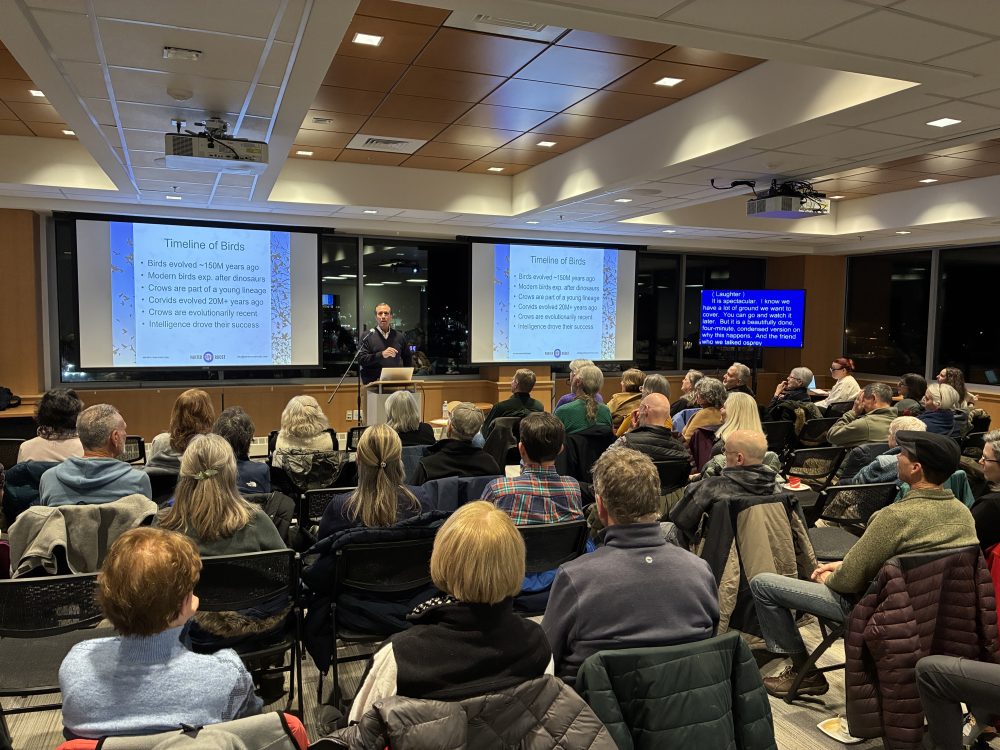
The evening ran seamlessly thanks to the outstanding work of Jane Rumrill, ECGA’s Events and Outreach Manager, whose careful planning and attention to detail made the event feel welcoming and effortless. From a smooth check-in process to ensuring full seating capacity for all, AV equipment was fully set, tested, and ready, Jane and a terrific team of volunteers created a relaxed, well-organized atmosphere from start to finish.
We were also treated to warm hospitality from George Peters at The Pinnacle, located at Harbor Place, a premier community meeting space and a perfect setting overlooking the Merrimack River for an evening of learning and conversation.
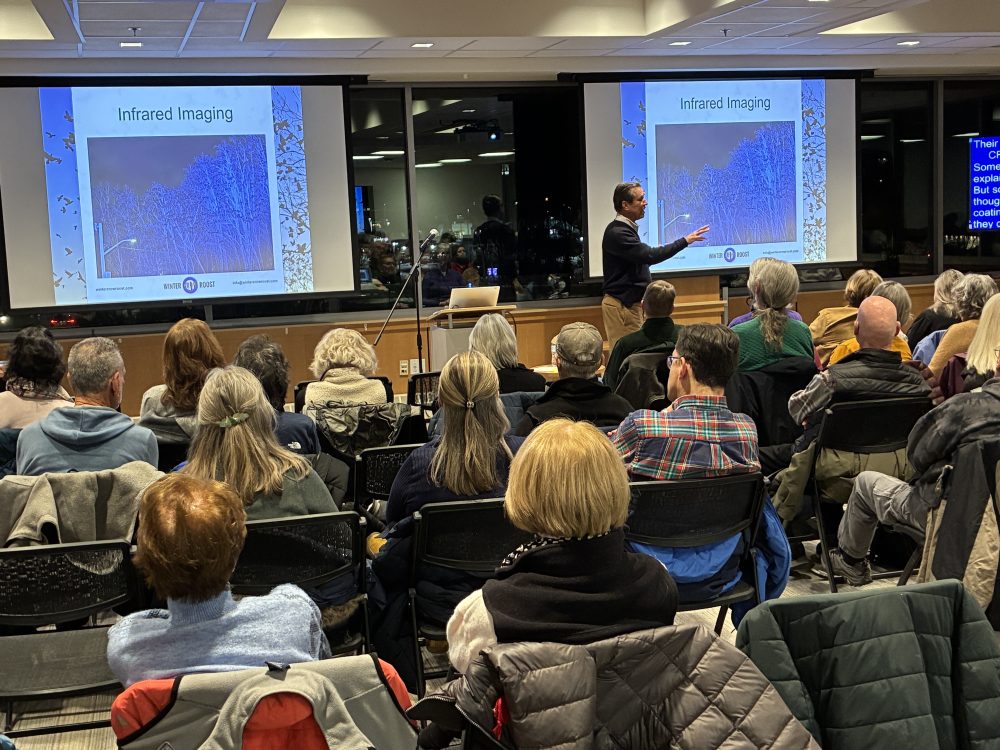
Attendees enjoyed an in-depth look at the Lawrence Winter Crow Roost, including how thousands of American Crows and Fish Crows gather nightly, how staging and flight streams shift through the season, and how the roost has evolved over time along the Merrimack River. The audience was fully engaged throughout, and the evening concluded with a lively and thoughtful Q&A session, reflecting both deep curiosity and genuine enthusiasm for these intelligent, social birds.
It was a pleasure to share this story with such an attentive audience, and a true honor to be part of a beautifully hosted Greenbelt event!
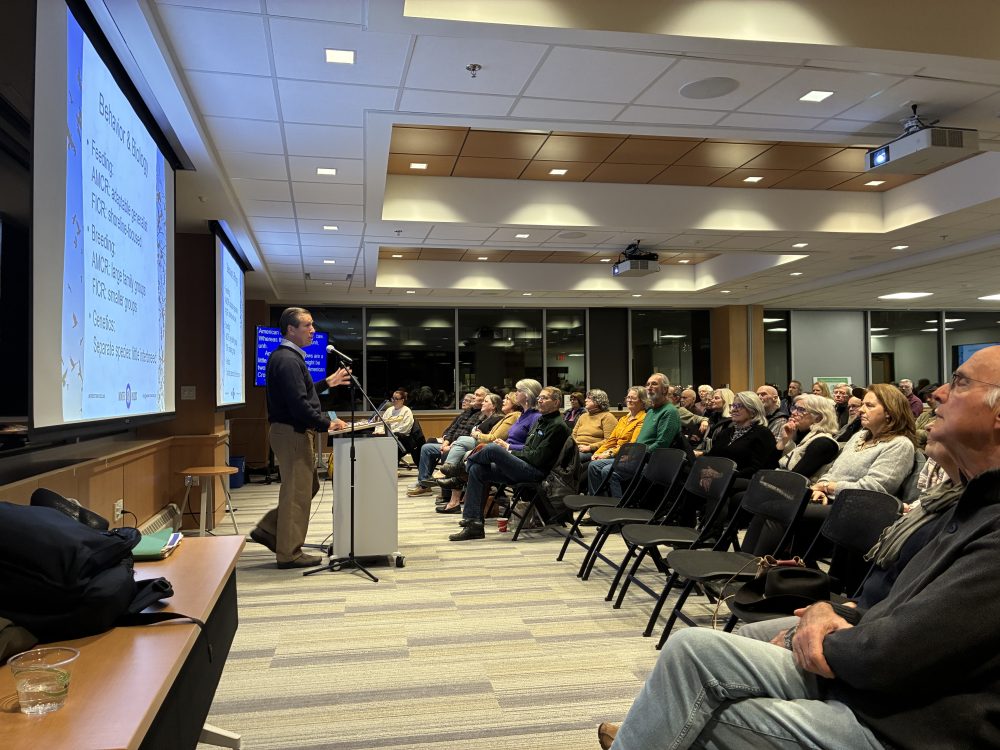
Here is a brief recap from the robust question and answer session that followed the talk!
1. Do the same crows return to the roost each year?
Yes. Research and long-term observation show that many of the same crows return to the same winter roost year after year, often following the same seasonal cycle throughout their lives.
2. What is the typical lifespan of American Crows and Fish Crows?
Both species commonly live 7–15 years in the wild, with some individuals living significantly longer under favorable conditions.
3. If we want to visit the roost on our own, how do we know where to go?
After each visit, I post observations on eBird, and I try to follow up with a detailed blog post that includes location notes, photos, and often video. My email is listed on the blog, and I’m always happy to help if you check in before planning a visit.
4. Do other corvids have similar winter roosts?
Yes for American Crows and Fish Crows. Ravens and Blue Jays do not form large communal winter roosts, while magpies may form much smaller ones.
5. The Lawrence roost includes about 10% Fish Crows, so are their numbers increasing?
Yes. Fish Crows continue to expand their range north and northeast, and their presence at the Lawrence roost has grown gradually over time.
6. Do American Crows and Fish Crows roost together?
Absolutely. They freely mix at winter roosts. In places like Florida, Fish Crows may even roost alongside multiple other bird species.
7. What causes European Starlings to form dramatic flight swirls and bursts?
Like crows, starlings likely do this for predator avoidance and coordination, especially during the settling process before roosting for the night.
8. How do you safely fly a drone near airports?
Extreme caution is essential. Flights in controlled airspace always require prior authorization, strict altitude limits, and adherence to FAA rules. Some situations require additional, advanced permissions.
9. How do crows coexist with large starling flocks and Peregrine Falcons nearby?
Very well. The main crow roost activity wraps up well before the peak of Peregrine Falcon breeding season, so conflicts around areas like the Ayer Mill Clock Tower are minimal.
10. Do crows mate for life?
Yes. Crows typically form long-term pair bonds, though a surviving bird will find a new mate if one is lost.
11. If crows breed in Beverly, do they still visit the winter roost?
Yes. Many local breeding birds commute to the winter roost at night, then return to their home territories during the day, dispersing again for the breeding season.
12. Why have many crow roosts shifted from rural to urban areas?
Urban areas offer more ambient lighting, reduced predation, and reliable food sources, making them safer and more predictable winter roost locations.
13. If most of the roost is American Crows, how many are migratory and how far do they travel?
Roughly 80% of the American Crows are migratory, traveling about 100–500 miles, mostly from the northeast, to reach the Lawrence winter roost.
14. How do crows communicate about food sources?
We don’t know exactly how it works, but crows clearly share information about food availability—likely through calls, behavior, and observation of one another.
15. Why are crows secretive and territorial during breeding season?
During breeding, crows focus tightly on defending their nesting territory. They stay discreet but will quickly support neighboring crows if a shared threat appears.
16. Do crows really remember people and faces?
Yes. Research by Dr. John Marzluff has shown that crows can recognize and remember human faces for many years, especially those associated with danger.
17. How do crows feed after heavy snow or extended cold?
They are extremely adaptable, shifting to foods that remain accessible—such as berries, carrion, and human-associated food sources—when ground foods are buried.
18. How do crows find each other again at night?
This remains something of a mystery, but vocalizations and calls almost certainly play a major role in helping crows regroup and locate the roost.
Leave A Comment