

Nov. 16, 2026 under clear skies, wind W 3 MPH, 43F. Arrived after sunset, surveyed along South Canal Street, and observed Crows gathering on the ground inside the National Grid substation. Then watched thousands of Crows in the overnight roost trees along the New Balance building on the south side of the Merrimack River, with far fewer numbers in trees on the east side of the Union Street Duck Bridge, and a smaller group roosting in riverside trees downriver near the Rt. 495 bridge. Tonight’s focus was on exploring new ways to estimate the number of Crows occupying these overnight roost trees. This first aerial image, captured using the drone’s visible-light camera, provides a remarkable view of hundreds of Crows perched throughout the canopy. Look closely at the darker sections of the trees, however, and imagine the challenges of detecting and counting individual Crows!
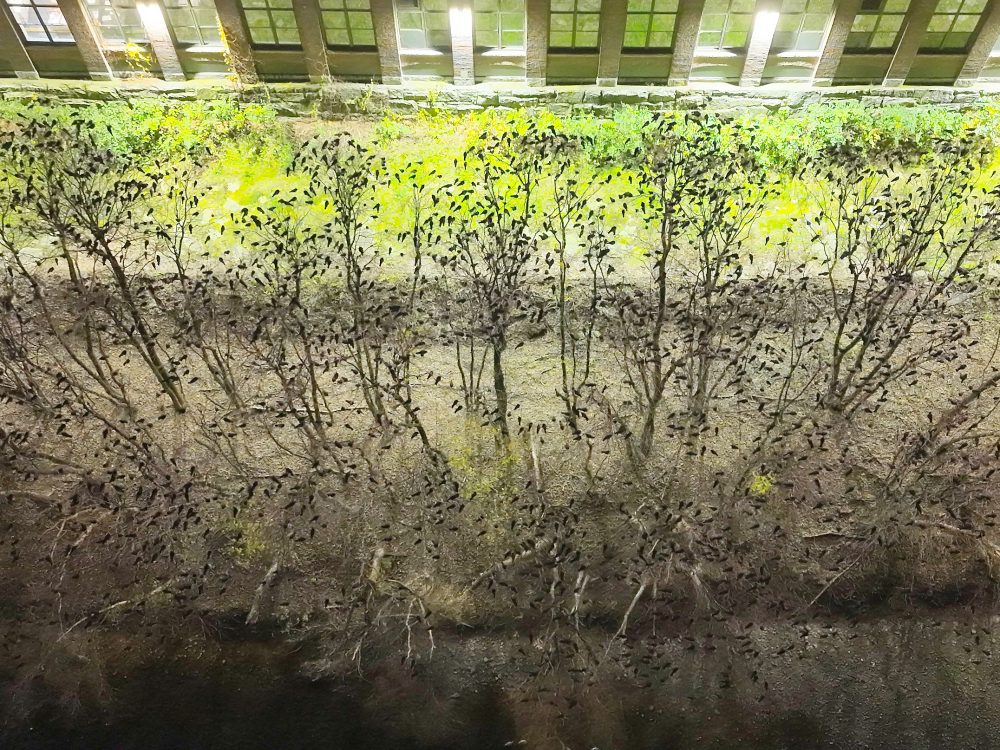
Now take a look at this nearly identical view captured with the drone’s thermal imaging camera. What a remarkable difference! Individual Crows stand out as bright thermal signatures, including many in the darker and more densely occupied sections of the canopy that are difficult to distinguish in the previous image. Preliminary visual estimates suggest approximately 1,150 Crows in the visible-light image and 1,500 in the thermal image. While these estimates require further validation, the comparison illustrates the exciting potential of aerial thermal imaging to improve our ability to detect and count overnight roosting Crows.
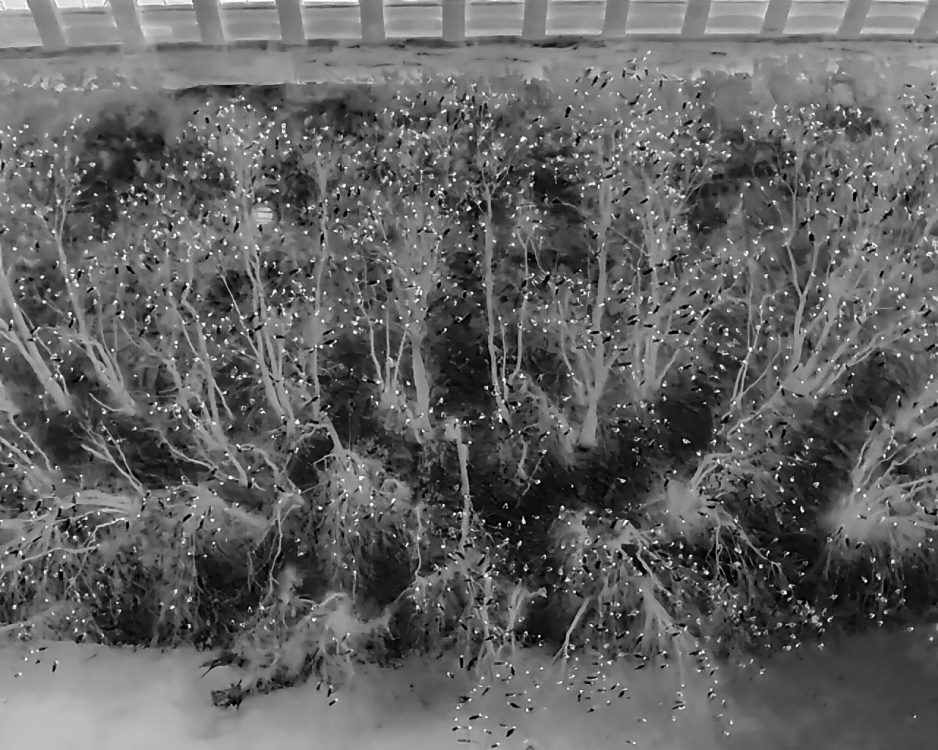
WhiteHot
Next, we repositioned the drone to capture a more steeply angled view looking along the line of overnight roost trees. This perspective provides another fascinating look at the distribution of Crows throughout the canopy, from branches extending over the Merrimack River to those closer to the historic mill building. Notice also the repeating pattern of vertical window bays along the New Balance building. These permanent architectural features provide valuable geographic reference points for dividing the extensive roost into smaller, more manageable counting sections and conducting repeatable aerial surveys throughout the winter.
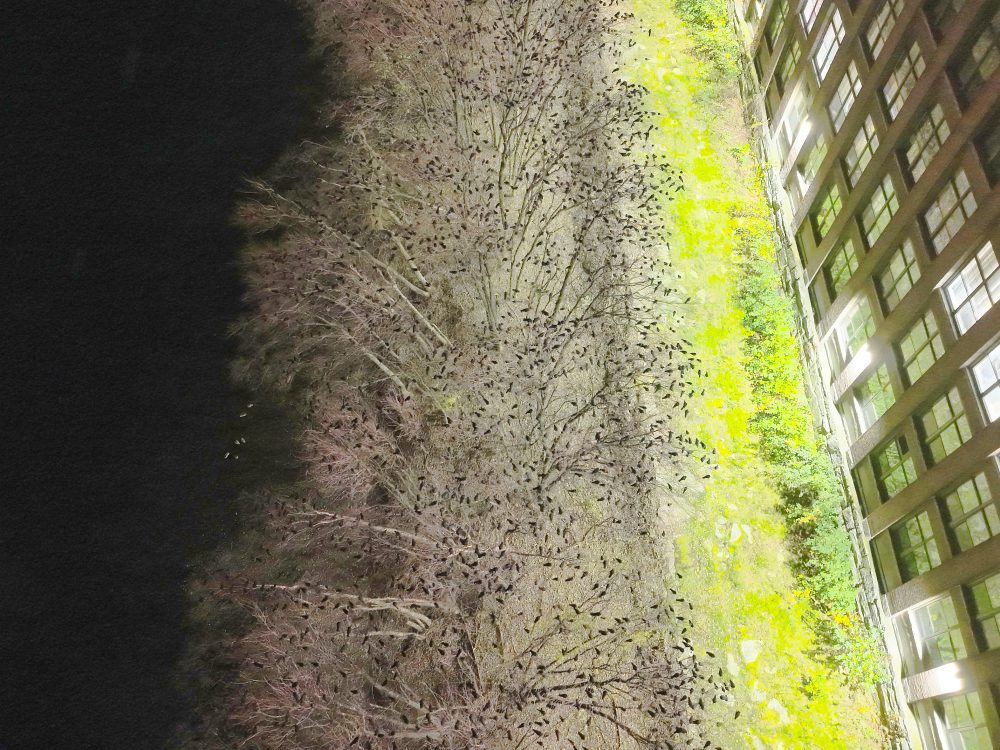
The corresponding thermal image, displayed in a colorful thermal palette, provides yet another extraordinary look into the nighttime world of the Crows. Hundreds of individual thermal signatures become visible throughout the intricate network of branches. Preliminary estimates suggest approximately 950 Crows in the preceding visible-light image and 1,250 in this thermal image. Interestingly, both photographic comparisons suggest roughly 30 percent more detectable Crows in the thermal imagery, although differences in image coverage, viewing angles, and counting uncertainty warrant further investigation.
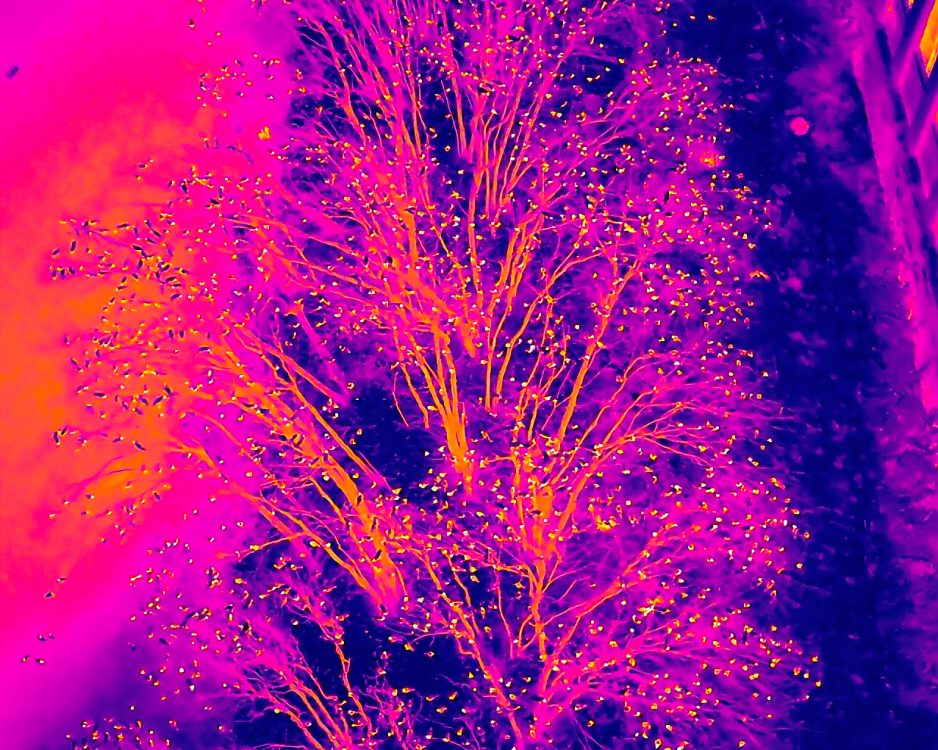
IronRed
By combining aerial thermal photographs with video footage captured from multiple viewing angles, we are beginning to develop a more systematic approach to estimating the winter Crow population. Tonight’s exploratory assessment suggests approximately 5,000 Crows in the main roost west of the Duck Bridge and another 3,000 in the trees immediately east of the bridge, for a combined preliminary estimate of 8,000 Crows across these two locations.
The larger opportunity extends well beyond tonight’s count. By establishing permanent geographic reference points, repeatable flight paths, and increasingly refined image analysis techniques, we hope to develop a more reliable and consistent methodology for monitoring the winter Crow roost throughout the season. With each outing, aerial thermal imaging is helping us reveal a little more of the hidden nighttime world of these remarkable birds!
Leave A Comment